Kamis, 06 April 2017

Get Free Ebook Into Egypt Again With Ships: A Message To The Forgotten Israelites

BY Eanverness IN No comments

Get Free Ebook Into Egypt Again With Ships: A Message To The Forgotten Israelites

If you are fond of this kind of publication, simply take it asap. You will be able to offer even more information to other people. You may likewise discover new things to do for your everyday task. When they are all offered, you can create brand-new setting of the life future. This is some parts of the Into Egypt Again With Ships: A Message To The Forgotten Israelites that you can take. When you truly need a publication to read, choose this book as good reference.

Into Egypt Again With Ships: A Message To The Forgotten Israelites

Into Egypt Again With Ships: A Message To The Forgotten Israelites


Into Egypt Again With Ships: A Message To The Forgotten Israelites


Get Free Ebook Into Egypt Again With Ships: A Message To The Forgotten Israelites

That's it, a publication to await in this month. Also you have actually wanted for long period of time for launching this book entitled Into Egypt Again With Ships: A Message To The Forgotten Israelites; you might not have the ability to get in some stress. Should you walk around and also look for fro guide until you really get it? Are you sure? Are you that free? This problem will certainly compel you to always end up to get a book. Now, we are concerning give you superb solution.

When other individuals still really feel so tough to locate this publication, you might not encounter that problem. Your means to make use of the web connection as well as join in this website is right. You could discover the source of the book as Into Egypt Again With Ships: A Message To The Forgotten Israelites that will not run out whenever. For making terrific condition, it becomes one of the manner ins which lead you to always use as well as utilize the sophisticated technology.

Well, have you discovered the means to obtain guide? Searching for Into Egypt Again With Ships: A Message To The Forgotten Israelites in the book shop will certainly be possibly tough. This is a very popular publication as well as you may have delegated buy it, indicated sold out. Have you really felt burnt out ahead over again to the book stores to understand when the local time to get it? Currently, see this site to obtain just what you require. Right here, we won't be sold out. The soft data system of this book truly aids everybody to get the referred publication.

You can locate the web link that we provide in website to download Into Egypt Again With Ships: A Message To The Forgotten Israelites By purchasing the economical rate and obtain finished downloading, you have actually completed to the initial stage to get this Into Egypt Again With Ships: A Message To The Forgotten Israelites It will certainly be nothing when having actually acquired this publication and also do nothing. Read it and also reveal it! Invest your couple of time to merely check out some covers of page of this book Into Egypt Again With Ships: A Message To The Forgotten Israelites to review. It is soft documents as well as easy to read wherever you are. Appreciate your brand-new behavior.

Into Egypt Again With Ships: A Message To The Forgotten Israelites

Product details

Paperback: 150 pages

Publisher: CreateSpace Independent Publishing Platform; 2/24/12 edition (March 25, 2012)

Language: English

ISBN-10: 1440469393

ISBN-13: 978-1440469398

Product Dimensions:

6 x 0.3 x 9 inches

Shipping Weight: 9.9 ounces (View shipping rates and policies)

Average Customer Review:

4.7 out of 5 stars

335 customer reviews

Amazon Best Sellers Rank:

#31,156 in Books (See Top 100 in Books)

This book is outstanding and the research is magnificent. Biblical and secondary sources combined produced one of my favorite books of all time. It's crazy that I thought I knew so much from religious Sunday Worship. Then I started actually reading my bible after being humbled by The Most High. I noticed that the Israelites were not the same people that I initially thought they were. Especially when I got to Deuteronomy 28. I've looked into so many books and continued researching, but this book in particular grabbed my full attention. I was quite familiar with the verses, but this book enlightened me further and helped me understand things that I had questions about. I am ordering this book for family and friends. It's all about the laws, statutes, and commandments. Repent and come back to The Most High and The Messiah. Israel and other nations that fear Him.

I purchased this book on the recommendation of a trusted friend. As I try to dig deeper into my history, I'll be reading a lot. My history isn't really taught in schools. Our history is barely a single, washed out and sanitized chapter in the History books. We are taught that we were in Africa, brought over on ships, worked as slaves singing negro spirituals in the fields, Abraham Lincoln signed the Emancipation Proclamation, Rosa Parks wouldn't give up her seat, Martin Luther King Jr marched, and we were free. What about BEFORE 1619? What was really going on and happening as we were "slaves"? Are we REALLY free? What about OUR history? So I read these books to gain insight. I think that if we taught our children that they are Kings and Queens, and conducted ourselves as such, we could make positive change. So add this book to your collection.

This book is a short but good book. His references are easy to find. But I wish that the information was more than just the same references the Hebrew Israelites use. Hebrews to Negroes, Wake up Black America by Ronald Dalton Jr is the best on the market with plenty of references. But this book is a good start.

This book is a MUST READ to fully understand what's happening in the world with regards to the so-called "African-American". Why do I say so-called? Because that is a term that America came up with to further confuse black people about their true identity. This book clarifies it all from the disobedience of the Israelites to the New Covenant that YHWH has promised. You will not be disappointed with this book.

This is a must read book for those who wish to understand the root causes of the plight of Blacks in America. The author lays out who the true Hebrew Israelites are and why they are in the condition they find themselves. The author does not just lay out the problems but points to a simple practical and Scripturally based solution to a centuries old problem. I found it very easy to read and very informative. The author uses Scripture to support his points as well as other research. It is a good book to add to your collection on this subject.

TRUTH..TRUTH..TRUTH....THIS IS OUR REAL HISTORY......EVERYONE WHO CALLS AND THINK OF THEMSELVES AS AFRICAN-AMERICAN...BLACK...ETC....SHOULD GET THIS BOOK!!!!!!!!!! IT WILL OPEN YOUR EYES AND MIND TO REAL TRUTH......TRUTH THAT WAS HIDDEN FROM US ....

This was my first book I just could not put down! Before I knew it I finished it. This was so enlightening and I'm truly blessed to find this jewel. The sleeping lionnes has been awaken....Shalom

This book is very enlightening, I used it during a report on the Trans Atlantic Slave Trade. I would recommend it to anyone seeking to know the truth.If you have ever studied Deuteronomy in the bible, this book can definitely help with clarity of that sacred book. We must return to the the beginning to discover who we really are. YHWH chosen people who disobeyed him and suffered and still suffering the consequences. Let this book be the beginning of what has been take from the real Jews of the Bible.Let the mighty God who died for your sins, share some knowledge that you the true Jew need to know..

Into Egypt Again With Ships: A Message To The Forgotten Israelites PDF
Into Egypt Again With Ships: A Message To The Forgotten Israelites EPub
Into Egypt Again With Ships: A Message To The Forgotten Israelites Doc
Into Egypt Again With Ships: A Message To The Forgotten Israelites iBooks
Into Egypt Again With Ships: A Message To The Forgotten Israelites rtf
Into Egypt Again With Ships: A Message To The Forgotten Israelites Mobipocket
Into Egypt Again With Ships: A Message To The Forgotten Israelites Kindle

Into Egypt Again With Ships: A Message To The Forgotten Israelites PDF

Into Egypt Again With Ships: A Message To The Forgotten Israelites PDF

Into Egypt Again With Ships: A Message To The Forgotten Israelites PDF

Selasa, 04 April 2017

Get Free Ebook Poor Economics: A Radical Rethinking of the Way to Fight Global Poverty

BY Eanverness IN No comments

Get Free Ebook Poor Economics: A Radical Rethinking of the Way to Fight Global Poverty

Do you know why you need to review this website as well as exactly what the relation to checking out e-book Poor Economics: A Radical Rethinking Of The Way To Fight Global Poverty In this contemporary era, there are many methods to obtain the e-book as well as they will certainly be considerably simpler to do. One of them is by getting guide Poor Economics: A Radical Rethinking Of The Way To Fight Global Poverty by online as exactly what we tell in the web link download. The book Poor Economics: A Radical Rethinking Of The Way To Fight Global Poverty can be a choice considering that it is so proper to your requirement now. To obtain guide on-line is really simple by just downloading them. With this chance, you can review the publication anywhere as well as whenever you are. When taking a train, waiting for checklist, and awaiting someone or various other, you could review this online publication Poor Economics: A Radical Rethinking Of The Way To Fight Global Poverty as a buddy once more.
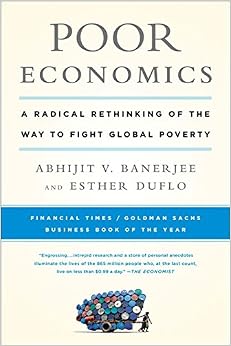
Poor Economics: A Radical Rethinking of the Way to Fight Global Poverty

Poor Economics: A Radical Rethinking of the Way to Fight Global Poverty


Poor Economics: A Radical Rethinking of the Way to Fight Global Poverty


Get Free Ebook Poor Economics: A Radical Rethinking of the Way to Fight Global Poverty

Keep move on to see exactly what you can do more. Still have no concept? We both are sure that everybody has various ways and excellence in undergoing their life. Nonetheless, the objective will be typically as the very same. Several will certainly need to get the new dialogues to obtain the recognition. Nonetheless, in providing details, it will limit on the resources. This way can use the false impression system for interacting.

When including Poor Economics: A Radical Rethinking Of The Way To Fight Global Poverty, we really feel really certain that this book can be a great material to read. Reviewing will certainly be so delightful when you like the book. The subject and just how guide is presented will affect just how someone likes learning more and more. This book has that element making lots of people fall in love. Even you have few minutes to spend daily to review, you could truly take it as benefits.

Yeah, soft documents ends up being a reason that you have to read this publication. If you bring the published book for some places, it will make your bag to be much heavier. When you could stick with the soft file, it will not need to bring heavy point. Nevertheless, the Poor Economics: A Radical Rethinking Of The Way To Fight Global Poverty in soft documents can be a choice when you choose some areas or only stay at home. Please read this publication. It is not only the suggestion; it will be ideas for you and you're your life to move on much better.

Taking this book is also very easy. Check out the link download that we have actually offered. You could really feel so pleased when being the participant of this on the internet collection. You can likewise locate the various other book compilations from around the world. Again, we below provide you not just in this type of Poor Economics: A Radical Rethinking Of The Way To Fight Global Poverty We as offer thousands of guides collections from old to the new upgraded book worldwide. So, you might not be afraid to be left behind by knowing this book. Well, not just learn about guide, yet understand exactly what guide supplies.

Poor Economics: A Radical Rethinking of the Way to Fight Global Poverty

Review

“Their empirical approach differs from policy discussions that base support or criticism of aid programs on a broad overview; instead they illuminate many practicable and cost-effective ways to keep children and parents living healthier and more productive lives. An important perspective on fighting poverty.”The Guardian, June 6, 2011“Duflo and Banerjee tell these stories (of their randomised control trials) in a lovely new book called Poor Economics. As they admit, randomistas cannot answer some big questions – how to tackle food prices, for instance. But through lots of microstudies, they make a subtle case for one big argument: aid really can help poor people, provided the money follows the evidence.” Vancouver Sun, June 11, 2011“This new book by Abhijit Banerjee and Esther Duflo eschews the ideology of both the right and the left, and focuses on what measurable evidence has to say about the often-conflicting myths that dominate discussion of international development.  The book is unusual, perhaps unique, in that the authors took a lot of time to talk to poor people about what they think and what they want.” Seth Godin (blog),June 15, 2011“Fact-based, actionable and totally unforgettable insights on the fight to help the poor help themselves.” Business World (India) 7/30“Banerjee and Duflo assemble a fascinating assortment of interventions from across the globe in their book and they use the sharply differing perspectives of Sachs, who leads the “supply wallahs”  (this school believes in providing more schools, teachers, etc., to beat the education problem) and of Easterly who is a “demand wallah” (no point in providing education needlessly) as a backdrop to make their own points on how to avoid the poverty trap.  They offer five key lessons. First: the poor lack critical pieces of information and thus do not make right decisions; second:  the poor bear responsibility for too many aspects of their lives; third: markets are missing for the poor; four: governments start policies without understanding the reality within which these are supposed to succeed; and five: negative expectations of what people can do can be self-fulfilling prophecies. Modest suggestions? Yes, but this is part of the charm of the book. It is engaging and informative — which is more than can be said for many books of this genre.”Fast Company, June 15, 2011“Fascinating and captivating. Their work reads like a version of Freakonomics for the poor. There are insights into fighting global poverty from the remarkable and vital perspective of those whom we profess to serve…They remind us, I think, of our shared humanity and how at some fundamental levels we really do think alike.” IndianExpress.com, June 18, 2011“This is a welcome shift in methodology as it implicitly concedes the need to combine social science with hard economics.” Outlook India, June 25, 2011“It vividly, sensitively and rigorously brings alive the dilemmas of the poor as economic agents in a variety of contexts, whether as consumers or risk-takers. There are splendid chapters on a variety of topics that affect the poor: food, health, education, savings, micro-credit, insurance, risk and even some cursory observations on political behaviour.” Reilly Media,“Radar” blog, June 27, 2011 “This is possibly the best thing I will read all year, an insightful (and research-backed) book digging into the economics of poverty... Love that the website is so very complementary to the book, and 100% aligned with the ambition to convince and spread the word.”Publishers Weekly (online), May 2011Financial Express, July, 2011“[Banerjee and Duflo] draw upon the latest literature in the domain, write simply and succinctly on complex issues, display a level of honesty and humility rare among economists, and take the help of many highly illustrative examples to help us understand poverty from many different angles. The overall message is unambiguous. This is a complex problem, the causes and symptoms of which vary highly between individual cases. The solutions? Well, they are rightly silent on that — at best there is a murmur or two. Poverty is not a single problem so the solutions are too case-specific for a single solution… This should be standard reading and essential material in all aid organisations and more so in the National Advisory Council, Planning Commission, Prime Minister's Office, and the various ministries — all those who don't spend time understanding poverty in close vicinity.” Development Policy (blog)“The persuasiveness of 'Poor Economics' lies in its authors' intellectual approach…Moreover, it is well organised throughout and nicely written… ‘Poor Economics' is well worth reading in full.”Financial Times, April 30, 2011“The ingenuity of these experiments aside, it is the rich and humane portrayal of the lives of the very poor that most impresses. Both books show how those in poverty make sophisticated calculations in the grimmest of circumstances… Books such as these offer a better path forward. They are surely an experiment worth pursuing.” Cleveland Plain Dealer, May 2, 2011“Here's something Jesus might recommend: Reading the clear, calm and revelatory book "Poor Economics," from Abhijit Banerjee and Esther Duflo. It is gloriously instructive, and bracing testimony in itself to the gold standard of the Enlightenment: the scientific method. The authors, both economists at MIT, spent 15 years in the field, running randomized controlled trials to test various approaches to combating poverty. They bring both rigor and humility to a predicament typically riven by ideology and blowhards.”Financial World (UK),June 2011“A remarkable work: incisive, scientific, compelling and very accessible, a must-read for advocates and opponents of international aid alike, for interested laymen and dedicated academics… Amartya Sen, fellow Nobel Prize winner Robert Solow and superstar economics author Steven Levitt wholeheartedly endorse this book. I urge you to read it. It will help shape the debate in development economics.”Amartya Sen“A marvellously insightful book by two outstanding researchers on the real nature of poverty.”Steven D. Levitt“This book is a must-read for anyone who cares about world poverty.  It has been years since I read a book that taught me so much. ‘Poor Economics' represents the best that economics has to offer.” Robert Solow“Abhijit Banerjee and Esther Duflo are allergic to grand generalizations about the secret of economic development. Instead they appeal to many local observations and experiments to explore how poor people in poor countries actually cope with their poverty: what they know, what they seem (or don't seem) to want, what they expect of themselves and others, and how they make the choices that they can make. Apparently there are plenty of small but meaningful victories to be won, some through private and some through public action, that together could add up to a large gains for the world's poor, and might even start a ball rolling. I was fascinated and convinced.” The Economist's Free Exchange, April 21, 2011“To cut to the chase: this is the best book about the lives of the poor that I have read for a very, very long time. The research is wide-ranging. Much of it is new. Above all, Banerjee and Duflo take the poorest billion people as they find them. There is no wishful thinking. The attitude is straightforward and honest, occasionally painfully so. And some of the conclusions are surprising, even disconcerting.” The New York Times, May 19, 2011“Randomized trials are the hottest thing in the fight against poverty, and two excellent new books have just come out by leaders in the field. One is “Poor Economics,” by Abhijit Banerjee and Esther Duflo… These terrific books move the debate to the crucial question: What kind of aid works best?”Forbes.com, April 25, 2011“a compelling and important read… an honest and readable account about the poor that stands a chance of actually yielding results.” The Guardian, April 11, 2011“[Banerjee and Duflo] offer a refreshingly original take on development, and they are very aware of how they are bringing an entirely new perspective into a subject dominated by big polemics from the likes of Jeffrey Sachs and William Easterly… they are clearly very clever economists and are doing a grand job to enrich their discipline's grasp of complex issues of poverty – so often misunderstood by people who have never been poor.” The Economist, April 22, 2011“In an engrossing new book they draw on some intrepid research and a store of personal anecdotes to illuminate the lives of the 865m people who, at the last count, live on less than 0.99 a day.”The Economist's Free Exchange Blog, April 21, 2011“Let me recommend it… Poor Economics is more than just a compendium of the randomistas' greatest hits. For one thing, it contains some well-observed reporting.” Business Day (South Africa)“An inspiring book full of insights and empathy that should be mandatory reading for policy makers and aid workers alike. It strips away preconceptions and offers a wealth of new perspectives. With passion, enthusiasm and a true spirit of scholarship they have tried to pin down the often very simple ways in which the lives of the poor can be improved through, for example, better access to healthcare, education, food and finance — all vital to economic growth.”Book Dwarf, February 14, 2011“They have a compelling argument that antipoverty programs can be effective if properly designed, and illustrate ways to test them to make sure they actually work. The writing style is accessible and engaging, but it's not dumbed down or over-simplified. The complexity of the subject means that this book is taking me longer to read than other books, but I've found the effort genuinely rewarding.”Kirkus Review, April 15, 2011Matthew Yglesias, May 7, 2011“Esther Duflo won the John Bates Clark medal last year for her work on development economics, so I was excited to read her new book with Abhijit Banerjee Poor Economics: A Radical Rethinking of the Way to Fight Global Poverty. It's a good book. It doesn't really contain a radical rethinking of the way to fight global poverty, but it does try to cut past lame debates over whether or not foreign aid “works” to instead attempt to find ways to actually assess which programs are working, which aren't, and how to improve those that don't.” The Wall Street Journal, April 30, 2011“Marvelous, rewarding…'More Than Good Intentions' and ‘Poor Economics' are marked by their deep appreciation of the precariousness that colors the lives of poor people as they tiptoe along the margin of survival. But I would give an edge to Mr. Banerjee and Ms. Duflo in this area—the sheer detail and warm sympathy on display reflects a true appreciation of the challenges their subjects face… They have fought to establish a beachhead of honesty and rigor about evidence, evaluation and complexity in an aid world that would prefer to stick to glossy brochures and celebrity photo-ops. For this they deserve to be congratulated—and to be read.”

Read more

About the Author

Abhijit Vinayak Banerjee is the Ford Foundation International Professor of Economics at MIT. He is the recipient of many honors and awards, including most recently the inaugural Infosys Prize in 2009, and has been an honorary advisor to many organizations including the World Bank and the Government of India. Esther Duflo is the Abdul Latif Jameel Professor of Poverty Alleviation and Development Economics at MIT. She is a recipient of the MacArthur “genius” award (2009) and the John Bates Clark medal awarded annually to the best American economist under forty (2012). In 2003, Banerjee and Duflo cofounded the Abdul Latif Jameel Poverty Action Lab (J-PAL), which they continue to direct.

Read more

Product details

Paperback: 320 pages

Publisher: PublicAffairs; Reprint edition (March 27, 2012)

Language: English

ISBN-10: 9781610390934

ISBN-13: 978-1610390934

ASIN: 1610390938

Product Dimensions:

5.5 x 1 x 8.2 inches

Shipping Weight: 9.6 ounces (View shipping rates and policies)

Average Customer Review:

4.4 out of 5 stars

225 customer reviews

Amazon Best Sellers Rank:

#29,403 in Books (See Top 100 in Books)

This book is a treasure trove of information about global poverty. I came into the book with a host of naïve assumptions about why poverty exists and what can be done to stop it, but the authors referenced a plethora of research studies that obliterated my ill-conceived notions about poverty and provided me with a solid foundation of knowledge upon which I can build.Prior to this book, I held a number of beliefs that I simply assumed were common sense. For example, I had assumed that if you offered free food to someone who is consuming barely enough calories to survive that the overall amount of calories they consume would increase. Apparently this is not the case-- if you give them free rice, they will take the money they used to spend on rice and instead spend it on more expensive, unhealthier food (or worse yet, something like tobacco). Thus, even if everyone in developed countries purchased food and gave it to the people in poorer nations this would not solve world hunger.In chapter after chapter the authors bring up an issue faced by the world's poor, offer up the existing theories about the problem, point to research that sheds light on why the theories or current efforts fail to address the problem, and suggest solutions that we have reason to believe would work based on the findings of various research studies. The issues faced by the poor are wide-ranging and the authors do an excellent job trying to cover them all. Here are the main issues covered (a full chapter is devoted to each one):1. Hunger (why poor people are not getting enough calories)2. Health (why poor people don't try harder to get their kids de-wormed, vaccinated, etc.)3. Family size (why poor people choose to have large families even though it is difficult to support more children)4. Education (why poor people don't invest in all of their kids' education)5. Risk/insurance (why poor people incur so much risk yet aren't insuring themselves against it)6. Borrowing/microfinance (why microfinance isn't going to solve poverty and why borrowing is still an issue for some)7. Saving (why poor people aren't saving)8. Entrepreneurship (why poor people aren't all the great "entrepreneurs" that microfinance makes them out to be)9. Politics/institutions/corruption (why poor people can see improvements in their lives even with corrupt institutions)Each chapter begins with a difficult question which might seem to have an intuitive answer but does not; then the authors point to the results of research studies that shed light on the answer proceed to explain why the problem has not been solved if we know why it is occurring. For example, the chapter on saving begins with the following question: can poor people actually save money? Many people would immediately answer "of course not" simply based on the fact that the people we're talking about are poor. However, the authors provide convincing evidence that shows poor people are in fact capable of saving. This begs the question, if they can save, and it would be in their interest to do so (to provide a safety net for the enormous risk they face in their lives-- e.g., a family members becomes sick and can't work), then why don't they save? Are they simply lazy, short-sighted, and incompetent as we are told in the press? As you might imagine, the answer is not so simple (or condescending). Poor people don't save for a variety of reasons. First off, many of the world's poor don't have easy access to savings accounts. Banks are highly regulated and thus there is a significant cost involved in serving a client-- so why would a bank make an effort to cater to poor communities where they'll receive very little income from their customers to compensate for the costs they're incurring in offering banking services? Furthermore, it is easier for middle-class or wealthy people to save, not simply because they have more income but because the system makes it incredibly simple: for example, many people work for an employer that sets up a 401k plan for them and offers to match funds and deduct funds from your paycheck without you having to do anything. Most of the world's poor do not have such a simple option for saving-- they must exercise willpower week after week to overcome the temptation to spend (which we all have, poor or not), whereas the rest of us can just tell an employer once that we want to contribute to our 401k plan and that's the end of it. The authors even told stories of women who were taking out a loan at 24% interest and then saving the money in an account that only paid 4% interest. This seems incredibly foolish, so the authors inquired as to the women's motivations. It turns out they were doing this because this would force them to save-- having to repay the repay the loan would act as a disciplining mechanism. Essentially they were trying to force themselves to save because they didn't have a 401k account that would just automatically withdraw the money. They face the same temptations that we all do, they just don't have an easy means of overcoming them.But the authors don't simply point out problems and throw up their hands in desperation-- they offer concrete solutions to each problem. Not all the solutions are equally convincing and the authors are the first to admit there is no "magic bullet" but they go a long way toward providing a framework for how we might think about solving global poverty in the next one hundred years. For example, in the chapter that deals with the enormous amount of risk the poor face (due to crop failures, health problems, etc.) they ask why the poor don't simply obtain insurance. The answer is complicated and has to do with moral hazard, adverse selection, and fraud, the combination of which has made it difficult for a "market" in microinsurance to develop in the same way we've had an innovation in microfinance. Thus, the authors suggest that governments step in and help create such a market by providing subsidies for insurance premiums. Before you throw up your hands and yell "that's socialism!" bear in mind that they cite previous instances of such subsidies and how they led to dramatic increases in the number of poor people who were insured.There is no easy way to solve global poverty, as the world's poor face a number of problems that seem intractable. Yet when we examine each of these problems by looking at how the poor actually behave and how they respond to incentives, we can begin to develop a framework for how we might solve each of these problems and reach a point where poverty is a thing of the past. But before we can do anything to eradicate poverty, we need to understand why it exists, why it is self-perpetuating, and what can be done to stop it. This is the function of this book, and it excels on all fronts.

The authors identify three major approaches to dealing with world poverty, suggest that whatever their virtues and faults, there is a very piecemeal and pragmatic approach through which significant gains can be made without addressing the systemic obstacles identified by the three approaches. Their analysis is brilliant, focused, rooted in first-rate data sets, yet rich in social detail and anecdotal vignettes. I believe there are probably right, and their approach deserves to be widely studied an evaluated by policy makers in the advanced and developing countries.The dominant school of thought is probably the supply-side theory, most visibly represented by Jeffrey Sachs (the authors call him a "supply wallah"). According to this theory, the poor are poor because they lack money and resources, and there is a "poverty trap" such that investment in productive technologies must be very large in order to have a positive and sustainable effect. Because poor individuals, and even poor countries, lack the capacity to finance such investments, they are trapped in a low-level economic equilibrium. For this reason, Sachs and the supply theorists advise that the rich countries transfer a large lump-sum amount of money to a poor country, so it can get over the poverty-trap hump.A second salient school of thought is the demand-side theory, represented by William Easterly and many others. Demand-siders (the authors call them "demand wallahs") believes that the poor are poor because they do not want to undertake what would be necessary to move out of poverty and there is no poverty trap. Thus, if you throw money and resources to the poor, they consume it immediately rather than using it for long-term betterment.The third school of thought is the corruption school, represented by Acemoglu and Robinson, as expounded in the book Why Nations Fail. According to this theory, countries remain poor because their governments are predatory, exploiting the citizenry by refusing to make investments in productive infrastructure, by direction all profits to cronies, and by permitting rampant corruption that renders creative entrepreneurship unprofitable. According to this school, to which I admit to being very favorable, the supply wallahs are wrong because the resources throw into the system will be appropriate by the rich and powerful, and the demand wallahs are wrong because the poor are actively maintained by the oligarchy in their position of servitude.The authors are very insightful and balanced in presenting the views of these three schools and the evidence that supports these various positions. They also clearly explain their mutual critiques. For instance, the supply wallahs claim that states are predatory and corruption is rampant only because the country is so poor, and the demand wallahs claim that when the people want to move out of poverty, they will reform their governments. I find these defenses of supply and demand wallahs rather tendentious, leaving the corruptions school as the overall most plausible school.I think it is fair to say that Banerjee and Duflo have little sympathy for demand and supply wallahs, but considerable respect for the corruption theory. Their own position is that there are virtually always ways to productively intervene to pull a significant fraction of people out of poverty. The authors, who have collected huge amounts of data and interviewed many poor people from around the world, make the following argument.Most important, the poor in a poor country have about the same array of preferences and capacities as that of the human population as a whole, and humans are substantively rational in making decisions that affect their lives. However, the poor have a lot fewer resources than the well-off, they lack information and skills provided to the well-off, and lack access to such public goods as clean water and consumables subject to food and drug regulations.The poor are therefore extremely heterogeneous. Microfinance organizations like the Grameen Bank therefore provide a general path to affluences, simply because only a fraction of the population has the will and ability to be successful entrepreneurs. On the other hand, entrepreneurs often fail several times before finally becoming successful, so the authors advise an expanded microfinance industry that is more tolerant of the sorts of behaviors that may involve short-term losses, but lead to long-run successes. The authors conclude that we must consider microfinance policies as extremely successful and worthy of following, even though it is not panacea for the abolition of poverty.Because the poor lack access to social services freely available to the non-poor, the authors advocate such measures as providing clean water to poor villages and adding nutrients, such as iron, to staple foods. This, they argue, is not charity but simply the extension to poor of services already supplied to the rest of society.Concerning education, the authors believe that poor parents are usually very eager to have their children educated, although they may lack the means of enrolling their children in schools or providing for their transportation to and from school. However, too often the content of schooling is determined by what is good for the more affluent classes, so poor children are led voluntarily to quit school. The authors advise that the content of education take into account the preferences and culture of the target population.I cannot do justice to the beauty and intricacy of the argument developed in this book. The authors' main point is that we must look closely at the details of the lives of the poor in order to develop policies to help people to pull themselves out of poverty. This is neither demand or supply wallah-ism, and as they repeatedly stress, real progress can be made even in a society whose government provides a poor environment for economic development.

Poor Economics: A Radical Rethinking of the Way to Fight Global Poverty PDF
Poor Economics: A Radical Rethinking of the Way to Fight Global Poverty EPub
Poor Economics: A Radical Rethinking of the Way to Fight Global Poverty Doc
Poor Economics: A Radical Rethinking of the Way to Fight Global Poverty iBooks
Poor Economics: A Radical Rethinking of the Way to Fight Global Poverty rtf
Poor Economics: A Radical Rethinking of the Way to Fight Global Poverty Mobipocket
Poor Economics: A Radical Rethinking of the Way to Fight Global Poverty Kindle

Poor Economics: A Radical Rethinking of the Way to Fight Global Poverty PDF

Poor Economics: A Radical Rethinking of the Way to Fight Global Poverty PDF

Poor Economics: A Radical Rethinking of the Way to Fight Global Poverty PDF

Sabtu, 18 Maret 2017

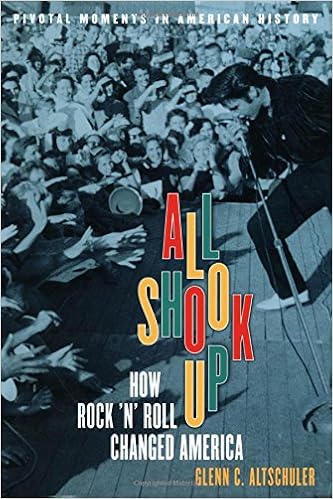
PDF Download All Shook Up: How Rock 'n' Roll Changed America (Pivotal Moments in American History), by Glenn C. Altschuler

BY Eanverness IN No comments

PDF Download All Shook Up: How Rock 'n' Roll Changed America (Pivotal Moments in American History), by Glenn C. Altschuler

Currently, invite the book vendor that will certainly become the most effective seller book today. This is it book. You may not really feel that you are not knowledgeable about this publication, may you? Yeah, nearly everybody finds out about this publication. It will certainly additionally undergo exactly how the book is actually provided. When you can make the chance of guide with the good one, you could pick it based upon the reason and also recommendation of exactly how guide will be.

All Shook Up: How Rock 'n' Roll Changed America (Pivotal Moments in American History), by Glenn C. Altschuler

All Shook Up: How Rock 'n' Roll Changed America (Pivotal Moments in American History), by Glenn C. Altschuler


All Shook Up: How Rock 'n' Roll Changed America (Pivotal Moments in American History), by Glenn C. Altschuler


PDF Download All Shook Up: How Rock 'n' Roll Changed America (Pivotal Moments in American History), by Glenn C. Altschuler

Find your brand-new experience by checking out All Shook Up: How Rock 'n' Roll Changed America (Pivotal Moments In American History), By Glenn C. Altschuler, this book will certainly offer you finished experience about this life. It could not always be on your own to get such experiences if you have not yet the money. To intend the trips and activities, you could read this kind of publication. Yeah, this is a very incredible book that will certainly supply numerous kinds of experiences.

This is just one of your much-loved publications, isn't it? That's true. If this is just one of them, you could start by reviewing page by web page for this publication. The reasons may not be so difficult. We provide you a good book that will not only inspire you yet also show you the true life. When getting this book to review, it will certainly be so different when you review others. This is a brand-new coming book that makes this world so shacked. For the sake of your life, you can obtain lots of options and advantages form this All Shook Up: How Rock 'n' Roll Changed America (Pivotal Moments In American History), By Glenn C. Altschuler

Currently, when you begin to read this All Shook Up: How Rock 'n' Roll Changed America (Pivotal Moments In American History), By Glenn C. Altschuler, maybe you will consider what you can obtain? Several points! In short we will certainly address it, yet, to recognize what they are, you need to read this publication on your own. You know, by checking out continuously, you can feel not only better yet additionally brighter in the life. Checking out should be served as the habit, as leisure activity. So when you are meant to check out, you can easily do it. Besides, by reading this book, you can likewise quickly make ea brand-new way to assume and feel well and sensibly. Yeah, life sensibly and wisely is much needed.

Having this book yet never ever attempting to check out is sort of rubbish. You should read it also couple of. Checking out by couple of is truly better than nothing. You can appreciate reading by starting in the very pleasurable time. The moment where you can actually filter the information called for from this book. The All Shook Up: How Rock 'n' Roll Changed America (Pivotal Moments In American History), By Glenn C. Altschuler will be so beneficial when you truly recognize exactly what in fact this book uses. So, discover your on means to see exactly how your selection concerning the brand-new life within the book.

All Shook Up: How Rock 'n' Roll Changed America (Pivotal Moments in American History), by Glenn C. Altschuler

Review

"One of the first to do rock-and-roll the significant service of locating it within the cultural and political maelstrom it helped to create. Altschuler does so with a good ear for the music and a deft hand, making this account a pleasure to read and ponder. He is not a flashy writer, but so much the better for his storytelling, which shows intelligence and narrative discipline.... Altschuler surpasses the admittedly sparsely populated field in the nuanced way he places the music within the conflicts--racial, sexual, commercial, and political--that it variously helped to encourage, exacerbate, and (occasionally) ameliorate. Altschuler tells a story of liberation and fear, of inspiration and exploitation, of repeated attempts to homogenize a form of cultural expression that sprang from somewhere so authentic in Western youth culture that it proved bigger and more powerful than any combination of its myriad opponents."--Eric Alterman, Atlantic Monthly"A well thought out, well researched work, peppered with evocative archival photos and full of terse, sharp comment and considerable feel for the music and its performers."--Toronto Globe and Mail"In All Shook Up, Glenn C. Altschuler vividly demonstrates that Rock 'n' Roll--as music, lyric, and gesture--provides the guide, the Ariadne's thread, through the labyrinth of social, cultural, generational, and sexual upheaval that was post-World War II America."--Kevin Starr, author of Americans and the California Dream"While incorporating extensive research and quotes from the most astute rock music critics, past and present, he manages to craft prose that will suit a general audience."--Library Journal"A book rich with shocking and humorous anecdotes.... Also offers insight into the often complicated racial and legal issues surrounding rock 'n' roll in the 1950s."--AP Weekly"A soulful, scholarly, and thoroughly fascinating examination of the transforming power of rock and roll in American culture. Brandishing the chops of a loving fan and a scrupulous historian, Altschuler nimbly tracks the rock-propelled revolutions in manners and morality that first rumbled forth from the 1950s, a decade that seems ever more the epoch of Elvis not Eisenhower. His is a finely tuned, perfectly pitched appreciation of the rhythms of a music that became not only a soundtrack but a heartbeat to American life."--Thomas Doherty, Brandeis University"Includes enough tantalizing tales along with thumbnail sketches of the forefathers and key moments from the annals of pioneer rock to keep the narrative lively and flowing.... This PhD is such an enthusiastic fan, my '50s generation awards him our ultimate accolade: he's obviously a 'Good Rockin' Doc.'"--Miami Herald"A fascinating and important look at a pivotal decade in American history.... Put on those old 45s and curl up for an enlightening and eminently readable story."--PW Daily"A remarkably thorough short history of the birth of rock and roll and its cultural contexts. Glenn Altschuler manages to weave the stories of musicians and record producers, cultural critics and legislators, psychologists and sociologists, businessmen and teenaged consumers into a lively, astute narrative of cultural change. The result is not just an especially informative history of rock, but an important cultural history of the 'long' 1950s."--Tom Lutz, author of Crying: A Natural and Cultural History of Tears and American Nervousness, 1903: An Anecdotal History

Read more

About the Author

Glenn Altschuler is Thomas and Dorothy Litwin Professor of American Studies and Dean of the School of Continuing Education and Summer Sessions at Cornell University. He is the author of several books on American history and popular culture, including Changing Channels: America in TV Guide.

Read more

Product details

Series: Pivotal Moments in American History

Paperback: 240 pages

Publisher: Oxford University Press (December 9, 2004)

Language: English

ISBN-10: 0195177495

ISBN-13: 978-0195177497

Product Dimensions:

9.2 x 0.8 x 6.1 inches

Shipping Weight: 11.2 ounces (View shipping rates and policies)

Average Customer Review:

3.6 out of 5 stars

34 customer reviews

Amazon Best Sellers Rank:

#111,705 in Books (See Top 100 in Books)

If you’re interested in an exhaustive history of rock’s birth, transformation and growth in the middle of the 20th century then this book is not for you. If you want a look at how rock moved from a profane, danceable musical form catalyzed by African Americans and then appropriated by white Americans both commercially viable and downright squeaky clean, then this is a worthwhile read. What’s most interesting are the reactions, on the business and political sides, to rock’s growth and how the art form was, a usual, used as a symbol for the forces aiming to accelerate or diminish a changing America.

"All Shook Up - How Rock `N' Roll Changed America" by Glenn Altschuler is a terrific and well documented book on the seismic social, sexual and racial changes in the United States that was both reflected and precipitated by a new music sweeping the nation in the 1950s and 1960s. This new music with its roots deeply entrenched in largely black American R&B and Gospel literally shook a nation that wanted to believe itself innocent but was undergoing rapid change with the return of combat vets, the ensuing Baby Boom and the suburbanization of our country. Disposable income was rapidly on the rise and technological marvels of the day, such as the transistor radio, rapidly spread this revolutionary new music. Altschuler does a superb job in his narrative documenting this revolution from both a societal and a musical perspective. He is perhaps at his best in describing the backlash against rock and roll as it began break in a color barrier that was still sacred to many, mostly white, Americans. He quotes authors of the day, "with tom-toms and hot jive and ritualistic orgies of erotic dancing, weed-smoking and mass mania, with African jungle background. Many music shops purvey dope; assignations are made in them. White girls are recruited for colored lovers . . . and guarantee a new generation subservient to the Mafia". Obviously some strong backlash.Oxford University Press is to be commended along with the editors of this series, Pivotal Moments in American History, David Hackett Fischer and James M. McPherson for living true to their words of historical interpretation and reporting "they were the results of decisions and actions by people who had opportunities to choose and to act otherwise". Also by showing "increasing sensitivity to issues of race, ethnicity, class, and gender in the context of large structures and processes". This volume is a classical one of American Studies, an interdisciplinary review of a period of time where social change was rapid. Researching or writing about this time through the lens of only one discipline would clearly have short-changed this era. Neither Altschuler nor Fischer and McPherson allowed that to occur and, in a sense, showed academic bravery for writing a serious book about our social history with rock and roll interwoven throughout.

Well written and easy to understand, this 185 page book tells the story of rock n roll from the 1940s to the 1960s. It tells the basic story without the tremendous depth , but instead talks about the effects of rock n roll on American society. It's an excellent primer on how the music of the 1950s affected the generation gap, the civil rights movement and set the stage for the unrest of the 1960s.

This is one of the best music history books I've ever had the pleasure of reading. Surprisingly, it was assigned for a US History class. All Shook Up tells the story of 20th century America through music. War, protest, loss, pride, love - all of it is explained here.I've convinced a few other people to read it, and they all really seemed to enjoy it.

Super boring.. didn't even finish it even though it was for school.. waste of money

Great scholary approach to the history of Rock!

A highly enjoyable and insightful book for a relatively brief analysis. As part of that generation, it was highly informative and meaningful.

An Informative and enjoyable read.

All Shook Up: How Rock 'n' Roll Changed America (Pivotal Moments in American History), by Glenn C. Altschuler PDF
All Shook Up: How Rock 'n' Roll Changed America (Pivotal Moments in American History), by Glenn C. Altschuler EPub
All Shook Up: How Rock 'n' Roll Changed America (Pivotal Moments in American History), by Glenn C. Altschuler Doc
All Shook Up: How Rock 'n' Roll Changed America (Pivotal Moments in American History), by Glenn C. Altschuler iBooks
All Shook Up: How Rock 'n' Roll Changed America (Pivotal Moments in American History), by Glenn C. Altschuler rtf
All Shook Up: How Rock 'n' Roll Changed America (Pivotal Moments in American History), by Glenn C. Altschuler Mobipocket
All Shook Up: How Rock 'n' Roll Changed America (Pivotal Moments in American History), by Glenn C. Altschuler Kindle

All Shook Up: How Rock 'n' Roll Changed America (Pivotal Moments in American History), by Glenn C. Altschuler PDF

All Shook Up: How Rock 'n' Roll Changed America (Pivotal Moments in American History), by Glenn C. Altschuler PDF

All Shook Up: How Rock 'n' Roll Changed America (Pivotal Moments in American History), by Glenn C. Altschuler PDF

Rabu, 08 Maret 2017

Download Ebook Pratyabhijnahrdayam: The Secret of Self-RecognitionBy Jaideva Singh

BY Eanverness IN No comments

Download Ebook Pratyabhijnahrdayam: The Secret of Self-RecognitionBy Jaideva Singh

Recognizing the method how to get this book Pratyabhijnahrdayam: The Secret Of Self-RecognitionBy Jaideva Singh is likewise important. You have actually been in right website to start getting this info. Obtain the Pratyabhijnahrdayam: The Secret Of Self-RecognitionBy Jaideva Singh web link that we provide right here as well as go to the web link. You could get the book Pratyabhijnahrdayam: The Secret Of Self-RecognitionBy Jaideva Singh or get it as soon as possible. You could quickly download this Pratyabhijnahrdayam: The Secret Of Self-RecognitionBy Jaideva Singh after obtaining bargain. So, when you require the book quickly, you could directly get it. It's so very easy and so fats, isn't it? You must favor to this way.

Pratyabhijnahrdayam: The Secret of Self-RecognitionBy Jaideva Singh

Pratyabhijnahrdayam: The Secret of Self-RecognitionBy Jaideva Singh


Pratyabhijnahrdayam: The Secret of Self-RecognitionBy Jaideva Singh


Download Ebook Pratyabhijnahrdayam: The Secret of Self-RecognitionBy Jaideva Singh

After locating guide qualify Pratyabhijnahrdayam: The Secret Of Self-RecognitionBy Jaideva Singh in this write-up, you have discovered the best book that could make you feel satisfied. This book is among the referred publication selections based on need. Do you really require this publication as resource and inspirations? Taking this book as one of the recommendation can reveal you to own the much-loved publication of your own.

Currently, your time is to create the various ambience of your life. You might not really feel that it will certainly be so peaceful to understand that this book is definitely yours. And also just how you can await the book to check out, you could simply locate the link that has actually been supplied in this website. This website will offer you all soft copy fie of guide that can be so simple to find out about. Related to this condition, you can really understand that guide is linked constantly with the life and also future.

Furthermore, we will certainly share you guide Pratyabhijnahrdayam: The Secret Of Self-RecognitionBy Jaideva Singh in soft data types. It will not disrupt you making heavy of you bag. You require just computer system gadget or device. The web link that we provide in this site is available to click then download this Pratyabhijnahrdayam: The Secret Of Self-RecognitionBy Jaideva Singh You recognize, having soft file of a book Pratyabhijnahrdayam: The Secret Of Self-RecognitionBy Jaideva Singh to be in your gadget can make ease the readers. So in this manner, be a great viewers now!

After getting the outstanding chance of guide here, you can not overlook that Pratyabhijnahrdayam: The Secret Of Self-RecognitionBy Jaideva Singh becomes one of the books that you will choose. Yet, you might not take guide currently due to some troubles. When you're really certain concerning the lesson and impact received from this book, you must start reading as soon as possible. It is just what that makes you always really feel amazing and amazed when recognizing a brand-new lessons about a book.

Pratyabhijnahrdayam: The Secret of Self-RecognitionBy Jaideva Singh

The Paratrisika (or Paratrimsika) is a short Tantra which has been held in the highest esteem by Kashmir Saivism or Trika. After Somananda, Abhinavagupta has written two commentaries on it, a short one (Laghuvrtti) and an extensive one the present Vivarana which is presented here for the first time in an English translation. The Paratrisika Vivarana is one of the most fascinating but also most difficult texts of the Kashmir Saiva School, and of the mystical philosophical literature of India as a whole. It deals with Ultimate Reality (anuttara or para) and with the methods of realization, centred above all in the theory and practice of the mantra. Abhinavagupta displays here his great exegetical genius and presents a penetrating metaphysics of language, of the Word (vak) and its various stages in relation to consciousness. His language reflects in a luminous fashion the mystical experience contained in this text.

  • Sales Rank: #632828 in Books
  • Brand: Brand: Motilal Banarsidass
  • Published on: 2016-02-17
  • Original language: Sanskrit
  • Number of items: 1
  • Dimensions: 8.43" h x .47" w x 5.55" l, 1.10 pounds
  • Binding: Paperback
  • 187 pages
Features
  • Used Book in Good Condition

About the Author
Dr. Jaideva Singh ( 1893-1986) : was a great scholar in musicology philosophy and Sanskrit. A former Principal of Y.D. Collegbe, Lakhimpurkheri,he also acted as a Chairman of U.P.Sangit natak Academi . He was awarded Padma Bhushan by the Government of India in 1974. His other works include : Siva Sutrras , Spanda-Karika, Pratybhijnahrdayam , Vijnanabhairava.

Pratyabhijnahrdayam: The Secret of Self-RecognitionBy Jaideva Singh PDF
Pratyabhijnahrdayam: The Secret of Self-RecognitionBy Jaideva Singh EPub
Pratyabhijnahrdayam: The Secret of Self-RecognitionBy Jaideva Singh Doc
Pratyabhijnahrdayam: The Secret of Self-RecognitionBy Jaideva Singh iBooks
Pratyabhijnahrdayam: The Secret of Self-RecognitionBy Jaideva Singh rtf
Pratyabhijnahrdayam: The Secret of Self-RecognitionBy Jaideva Singh Mobipocket
Pratyabhijnahrdayam: The Secret of Self-RecognitionBy Jaideva Singh Kindle

Pratyabhijnahrdayam: The Secret of Self-RecognitionBy Jaideva Singh PDF

Pratyabhijnahrdayam: The Secret of Self-RecognitionBy Jaideva Singh PDF

Pratyabhijnahrdayam: The Secret of Self-RecognitionBy Jaideva Singh PDF

Jumat, 17 Februari 2017

Ebook Download Word Power Made Easy: The Complete Three-Week Vocabulary BuilderBy Norman Lewis

BY Eanverness IN No comments

Ebook Download Word Power Made Easy: The Complete Three-Week Vocabulary BuilderBy Norman Lewis

Learn the technique of doing something from lots of resources. Among them is this book qualify Word Power Made Easy: The Complete Three-Week Vocabulary BuilderBy Norman Lewis It is a very well understood publication Word Power Made Easy: The Complete Three-Week Vocabulary BuilderBy Norman Lewis that can be referral to review now. This advised book is one of the all terrific Word Power Made Easy: The Complete Three-Week Vocabulary BuilderBy Norman Lewis compilations that remain in this site. You will likewise discover other title and also styles from different authors to browse below.

Word Power Made Easy: The Complete Three-Week Vocabulary BuilderBy Norman Lewis

Word Power Made Easy: The Complete Three-Week Vocabulary BuilderBy Norman Lewis


Word Power Made Easy: The Complete Three-Week Vocabulary BuilderBy Norman Lewis


Ebook Download Word Power Made Easy: The Complete Three-Week Vocabulary BuilderBy Norman Lewis

Some individuals may be giggling when checking out you reading Word Power Made Easy: The Complete Three-Week Vocabulary BuilderBy Norman Lewis in your extra time. Some may be appreciated of you. And also some may really want resemble you which have reading hobby. What concerning your personal feel? Have you really felt right? Checking out Word Power Made Easy: The Complete Three-Week Vocabulary BuilderBy Norman Lewis is a need as well as a hobby at once. This problem is the on that will certainly make you feel that you need to check out. If you recognize are trying to find the book qualified Word Power Made Easy: The Complete Three-Week Vocabulary BuilderBy Norman Lewis as the option of reading, you can discover right here.

As understood, adventure and encounter about session, home entertainment, and also expertise can be acquired by just reading a book Word Power Made Easy: The Complete Three-Week Vocabulary BuilderBy Norman Lewis Even it is not directly done, you could know more about this life, concerning the world. We offer you this appropriate as well as simple means to acquire those all. We provide Word Power Made Easy: The Complete Three-Week Vocabulary BuilderBy Norman Lewis and also lots of book collections from fictions to science whatsoever. One of them is this Word Power Made Easy: The Complete Three-Week Vocabulary BuilderBy Norman Lewis that can be your partner.

Quantities of guide collections that we provide in the listings in this websites are in fact numerous. Numerous titles, from variant topics and themes are created by variants writers. Moreover, they are additionally released from numerous publishers on the planet. So, you may not only locate Word Power Made Easy: The Complete Three-Week Vocabulary BuilderBy Norman Lewis in this site. Lots of many publications can be your for life pals start from now.

When most of them are still puzzled of the best ways to get this book, you have actually been below. The best place to locate great deals of publication classifications consisted of Word Power Made Easy: The Complete Three-Week Vocabulary BuilderBy Norman Lewis It's so simple to get how this book is revealed. You could just go to, search, and also find the title of guide that you intend to get. Lots of publications from several sources as well as nations exist. So, you may to head to various other website to locate the exact publications to have today.

Word Power Made Easy: The Complete Three-Week Vocabulary BuilderBy Norman Lewis

  • Sales Rank: #3475333 in Books
  • Published on: 1949
  • Ingredients: Example Ingredients
  • Number of items: 2
  • Binding: Hardcover

Word Power Made Easy: The Complete Three-Week Vocabulary BuilderBy Norman Lewis PDF
Word Power Made Easy: The Complete Three-Week Vocabulary BuilderBy Norman Lewis EPub
Word Power Made Easy: The Complete Three-Week Vocabulary BuilderBy Norman Lewis Doc
Word Power Made Easy: The Complete Three-Week Vocabulary BuilderBy Norman Lewis iBooks
Word Power Made Easy: The Complete Three-Week Vocabulary BuilderBy Norman Lewis rtf
Word Power Made Easy: The Complete Three-Week Vocabulary BuilderBy Norman Lewis Mobipocket
Word Power Made Easy: The Complete Three-Week Vocabulary BuilderBy Norman Lewis Kindle

Word Power Made Easy: The Complete Three-Week Vocabulary BuilderBy Norman Lewis PDF

Word Power Made Easy: The Complete Three-Week Vocabulary BuilderBy Norman Lewis PDF

Word Power Made Easy: The Complete Three-Week Vocabulary BuilderBy Norman Lewis PDF

Rabu, 01 Februari 2017

Ebook Them: Why We Hate Each Other - and How to Heal

BY Eanverness IN No comments

Ebook Them: Why We Hate Each Other - and How to Heal

When offering Them: Why We Hate Each Other - And How To Heal as one of the collections of lots of publications below, we assume that it can be one of the most effective publications provided. It will have lots of followers from all nations readers. As well as specifically, this is it. You can actually expose that this book is just what we assumed initially. Well currently, let's seek for the other publication title if you have actually got this book review. You could locate it on the search column that we provide.

Them: Why We Hate Each Other - and How to Heal

Them: Why We Hate Each Other - and How to Heal


Them: Why We Hate Each Other - and How to Heal


Ebook Them: Why We Hate Each Other - and How to Heal

Do not make you feel hard when looking for book that you will certainly check out to save your time. Book is always preferred in each time, every age, as well as every age. All individuals will certainly need book as reference to do something. When you have no concepts regarding what to do in this downtime, obtain Them: Why We Hate Each Other - And How To Heal as one of the reference books that we supply! Giving special publications are so positive for us. It is so easy to offer kindness for everyone.

Guide that exists to check out in this time will certainly be the Them: Why We Hate Each Other - And How To Heal As we have provided and also offered, you could interest in the cover of this publication in the beginning. Considering the cove will certainly make you really feel interested or otherwise in this book. But, many people have verified that this publication has actually been really intriguing to check out, even looking from just guide cover. The principle of making the cover as well as just how the writer gives the title are really incredible.

Well, still confused of the best ways to obtain this e-book Them: Why We Hate Each Other - And How To Heal here without going outside? Merely attach your computer system or kitchen appliance to the net and also start downloading and install Them: Why We Hate Each Other - And How To Heal Where? This web page will certainly reveal you the link page to download and install Them: Why We Hate Each Other - And How To Heal You never fret, your favourite book will certainly be earlier your own now. It will certainly be a lot easier to take pleasure in checking out Them: Why We Hate Each Other - And How To Heal by on-line or getting the soft documents on your device. It will certainly no matter which you are and also exactly what you are. This book Them: Why We Hate Each Other - And How To Heal is written for public as well as you are among them which could enjoy reading of this publication Them: Why We Hate Each Other - And How To Heal

Why should believe extra? Checking out a publication will not spend or squander your time, will you? You can truly set your time to take care of when as well as where you could take pleasure in reading this book. Even you still have the various other tasks or books to check out, you can additionally make inter-spaced to try reading this book. It will actually enhance your mind as well as idea. So, if there is a better publication to review, why don't try it? Allow enrich your thought as well as experience of reading many publications from the broads.

Them: Why We Hate Each Other - and How to Heal

Product details

#detail-bullets .content {

margin: 0.5em 0px 0em 25px !important;

}

Audible Audiobook

Listening Length: 9 hours and 16 minutes

Program Type: Audiobook

Version: Unabridged

Publisher: Macmillan Audio

Audible.com Release Date: October 16, 2018

Language: English, English

ASIN: B07BN4W5GY

Amazon Best Sellers Rank:

Normally, political/civic books are so far out of my realm that I don't ever look in that section. But, with the current climate in the US, I decided a couple of months ago to start reading some to try and figure out what is going on in our country today...and, how can we start to heal ourselves and our country. Or, if that is even a possibility?I do remember with great clarity the day President Kennedy was assassinated in 1963 as I was a Jr. in High School. And, Dr. Martin Luther King Jr's assassination followed in 1968. And, Robert Kennedy's was in June of 1968. The Civil Rights movement in the US was ongoing as well as the turmoil as the result of the Viet Nam conflict. Surprisingly, I worked at GE in the Armament Division as a mechanical inspector.from 1966 to 1970. (At that time GE had contracts for the 20 MM Vulcan Guns and the 7.62 Mini Guns).Somehow, despite this turmoil in our nation (including the Viet Nam conflict), I enlisted in the United States Navy in 1971 and remained on active duty for 20 years (and 13 days!) retiring as a Chief Petty Officer. Each and every time I re-enlisted, I took the oath of enlistment most seriously and swore to obey the orders of the President of the United States and those of the officers appointed over me.So, here I am 27 years after my USN retirement...and wondering what in the world is going on in our country. I am trying to understand what has happened to the moral compass in the US and the pure hatred and venom that is being spoken throughout our country. Rancor, a lack of civility and derisive descriptions are everywhere. Respect has gone out the window. And, as for politics, I like to remember the days of President Reagan and Speaker of the House Tip O'Neill. In 1980, it was a divided government and Tip said 'We will cooperate'.The bottom line is that I truly love my country. In the preceding paragraphs I wanted to gave some background on myself as an individual and the reason I am trying to ascertain the problems in the US today. I decided that I should educate myself more and have started reading books that I normally would not read. Hopefully, this will give me a clearer understanding of the current climate in the US. So, I read with objectivity and a desire to learn.Senator Ben Sasse and his book 'THEM - Why we Hate Each Other' is well written and offers compelling arguments about the reason the United States has turned into such an angry place. For me, the anger is most difficult to witness as it is appearing everywhere.To paraphrase the author, this crisis really is not about politics. Local communities and families have changed considerably in the last decades. The workplace is more mobile and the loss of that close community feeling has evaporated. Loneliness has invaded our society which has led to depression and in some cases abuses of alcohol and Opioids. Statistics for deaths are included which are mind boggling.The portion of this book that dealt with 'Polititainment' was indeed right up my alley. A couple of months ago, I stopped watching the national news. (And, nearly all of our local news as they started to cover the national stories, as well). I was inundated with 'breaking news' all the time and just tired of hearing it. Sen. Sasse confirmed my belief about the reporters and inherent biases. Once again to paraphrase the author...people work hard to confirm biases and not to challenge them.After reading this book, I do have hope for our country once again. Will it be an easy journey to embark on? No, I fear it won't, but as individuals we can start by developing new habits of mind and heart. And, I do see a circle of division that does go back to politics. Politics may not be the problem, as the author states, but from my viewpoint is definitely a contributing factor.One quote that I felt most pertinent 'We need to be needed' and this is the crux of what is missing today. And, I have lived through tumultuous times and we as a nation have survived. 'Love your neighbors and connect with your community'. Get back to the roots that once were such a part of our society. Family, friends, community and church need to be stressed once again...Most highly recommended.

I don’t read political books. So why did I pick this one up? Two reasons; three, really – First, because Ben Sasse is one of the few elected officials in our government that I respect as a man of consistent integrity. Second, because I am sick and tired of the constant stream of vitriol that is fed to us via “talk” radio, irate FB posts, and screaming heads on “news commentary” TV shows. Third, I was intrigued to explore Sasse’s solution.I wasn’t disappointed. I already knew that Senator Sasse is a convinced and unashamedly Christian voice in the public square. But I discovered he is also an above average writer, with an easy and riveting style even when writing about complex – and somewhat controversial - matters pertaining to our public life.In this book you will get to know Ben Sasse, the small town Nebraska boy (he attended a Lutheran day school), the sports fan, the devoted husband and father. He and his wife have purchased a home in the small prairie city where he was raised. Ben now commutes weekly between DC and Fremont, NE in order to raise his own kids while simultaneously engaged in debating important national issues on Capitol Hill – did you catch his masterful put down of the raucous behavior of his Republican and Democratic colleagues on the Senate Judiciary Committee during the Kavanagh hearings, lecturing them on the operation of the Supreme Court as envisioned by the Founders and outlined in the Constitution?His Lutheran roots show up in a number of places as he nicely unpacks the doctrine of vocation, two kingdoms, etc. As a college student he was involved in Campus Crusade and began to read theology in earnest. The writings of R C Sproul converted him to a Calvinist understanding of the reformation. Though he spent some years as President of a Lutheran college, he is currently a member of a PCA congregation in Fremont. Still, he calls himself a “Lutero-Calvinist,” saying he is “in love with the Lutheran tradition.” He counts among his closest friends none other than Mike Horton of White Horse Inn fame, who is a great fan of Lutheran teaching. All of which explains why you will find so much of this book solidly rooted in theology. For example:"We all remember that our Founders had strong views about freedom and equality and about how government depended on the consent of the governed. But we tend to forget that our system rests on an even greater core conviction: human beings are fundamentally fallen, selfish, and inclined to let our passions run roughshod over our reason. Simply put, the founders believed that we’re very broken."….Colonists taught their children that imperfect human beings could see the world only imperfectly, through unreliably self-centered lenses. Children learning their alphabet from the New England Primer, the most important and most widely read textbook in seventeenth- and eighteenth-century North America, began with human fallibility from the letter 'A': 'In Adam’s fall, we sinned all.'” (140)His analysis of the aforementioned vitriol in public discourse is intriguing. We hate each other, Sasse claims, because we are lonely. The ties that used to bind previous generations to family, friends, neighborhoods and communities are no longer in place, so America is suffering from a “loneliness epidemic.” I find this personally gratifying, because in my 1994 book “Dying to Live” I used precisely that phrase to describe what day-to-day existence had already become way back then in a frenetically busy, but ultimately lonely world.The greatest health crisis in America, Sasse writes, “is not cancer, not obesity, and not heart disease – it’s loneliness.” Citing research by health professionals, he states: “Persistent loneliness reduces average longevity by more than twice as much as heavy drinking and more than three times as much as obesity. (In fact, loneliness drives obesity, and not vice versa, as previously thought.)” (23)As an attempt to treat their persistent loneliness, Sasse theorizes, people create “tribes” of “us” vs. “them” to create an artificial sense of identity and belonging. Secure within their tribe, they lash out and hurl personal insults at the opposition instead of engaging in reasoned and intense dialogue. He calls all of us to examine the alliances we have formed in the culture wars: “There is a deep and corrosive tribal impulse to act as if ‘the enemy of my enemy is my friend,’ but sometimes the enemy of your enemy is just a jackass.” (156)The Senator does not suggest a truce or compromise on any of the important moral and civic issues facing our nation, but he does advocate for debate instead of hate. “I’m not advocating for a ‘mushy middle’ on policy, as if just singing ‘Kumbaya’ and ‘splitting the difference’ between conservative and progressive policy proposals would somehow work,” writes Sasse. “I don’t think it will. But debating policy and demonizing our debate partner are fundamentally different things.” (242 f.)Daily bread, according to Dr. Luther, includes “devout husband or wife, devout children, …good friends, and faithful neighbors.” Dr. Sasse suggests we re-cement the ties of family, friendship, and community as a remedy for the hatred dished out regularly and routinely in our society. The antidote to loneliness is, of course, love – not what too often passes for love, but the genuine variety that is born, nurtured, and carefully tended within caring familial relationships and deep friendships. The senator is refreshingly personal and transparent about how both these essential components in human life transform and give meaning to a busy public life.This book, more than any I’ve read, has given me a healthy respect for the power of technology for good or for ill. Rather than usher in a new information age of an informed and motivated citizenry, computer technology has instead amped up division among us and diminished our social capital."Social media companies promise new forms of community and unprecedented connectedness. But it turns out that at the same time that any Billy Bob in Boise can broadcast his opinions to thousands of people, we have fewer non-virtual friends than at any point in decades. We’re hyperconnected, and we’re disconnected." (28)"The smartphone, with its endless apps, is designed to whisper to you that the thing you are doing is not the thing you ought to be doing. The phone isn’t encouraging your progress; it’s causing you stress. Want to know what hostile AI looks like? You’re holding it." (196)Of course, like Frodo in Lord of the Rings, we are compelled to tote around the very treasure that is destroying us. Few of us have the luxury of living or communicating off the grid, without our technology. How, then, shall we live? Sasse candidly shares his successes and failures with us in devising a way to use his devices rather than allowing them to use him.Some of the rules or guardrails are relatively obvious: "Turn off most notifications and alerts. Stop checking in on retweet counts and likes. Read the comments on your posts only at a predetermined time (or just don’t read them). Unfollow the politics addicts. Have places your phone is never allowed—such as at the dinner table. Take regular social media fasts—times of the day and days of the week where you don’t open the apps. Constantly ask yourself: Two weeks from now, will I wish I had spent the ten minutes I’m about to spend on Twitter reading five pages of the book I’m carrying around instead (and oh, this plan requires constantly carrying a book around)? One of my most important rules is that I never allow any long chunk of work time to be interrupted by social media. Instead, I look at it primarily only in small, hard-to-use, backend-constrained chunks of time—boarding a flight or at the end of a workout." (196 f.)So, no - I haven’t seceded entirely from the social media swirl; but I have cut way back. Because like many, I rely on Facebook to promote and manage the non-profit I work for, I’ve kept my Facebook account for the time being. But I’ve resolved (for better or worse) never to post anything more on my personal timeline – nor ever again to waste literally hours endlessly binge-scrolling through everybody’s take on matters great and small. I’ll get my news from the Wall Street Journal and NPR (just to keep matters balanced), but I’ve resolved not to become just one more “Billy Bob in Boise” broadcasting my opinions to thousands of people who themselves are endlessly scrolling through the detritus of shock and dismay, looking for something to repost to their own circle of “friends.” I prefer my friends real rather than virtual anyway.Don’t get me wrong; Sasse’s book is not a diatribe against how social media has created the tribalism phenomenon in our country – you may or may not be led to the self-imposed fast I have embarked on. But you will find this remarkable book enlightening and inspiring on numerous levels regarding civic and political life in our land. Do yourself a favor and read it!Harold L. SenkbeilWaukesha, WIhsenkbeil@doxology.us

“There is a deep and corrosive tribal impulse to act as if ‘The enemy of my enemy is my friend.’ But sometimes the enemy of your enemy is just a jackass.” This quote warns us that a sense of loneliness and a need to belong should not lead us to join an anti-tribe, “defined by what we’re against rather than what we’re for.” Using statistics and information from the social sciences, Sasse shows how moving from one community to another, changing jobs more frequently than in the past, and the rise of technology that puts us “alone together,” all stimulate a sense of loneliness. Loneliness and community are themes that runs through the book. Urban vs. rural lifestyles and differing educational levels give us diverging ways of looking at ideas. Media’s financial need to grab the attention of viewers can lead to divisions. In response to queries about what keeps leaders up at night, their worry was: “to quietly exacerbate the fractures that already divide America internally.“ As a liberal, I wanted to understand why I admire Ben Sasse so much. I was not disappointed. In his book, The Righteous Mind, Johnathan Heidt supplements the liberals’ values of care and fairness with the conservatives’ values of loyalty, authority and sanctity. Sasse’s ideas about putting down roots and participating in the life of one’s community made me understand more deeply what Heidt was talking about. Sasse’s book is liberally infused with thought provoking quotations. He quotes Madison: “If men were angels, no government would be necessary. If angels were to govern men, neither external nor internal controls on government would be necessary.”

Them: Why We Hate Each Other - and How to Heal PDF
Them: Why We Hate Each Other - and How to Heal EPub
Them: Why We Hate Each Other - and How to Heal Doc
Them: Why We Hate Each Other - and How to Heal iBooks
Them: Why We Hate Each Other - and How to Heal rtf
Them: Why We Hate Each Other - and How to Heal Mobipocket
Them: Why We Hate Each Other - and How to Heal Kindle

Them: Why We Hate Each Other - and How to Heal PDF

Them: Why We Hate Each Other - and How to Heal PDF

Them: Why We Hate Each Other - and How to Heal PDF

Jumat, 27 Januari 2017

Free Download Black Fire: An anthology of Afro-American WritingBy Leroi Jones

BY Eanverness IN No comments

Free Download Black Fire: An anthology of Afro-American WritingBy Leroi Jones

Considering that e-book Black Fire: An Anthology Of Afro-American WritingBy Leroi Jones has fantastic advantages to check out, many individuals now grow to have reading habit. Sustained by the industrialized modern technology, nowadays, it is not tough to obtain the e-book Black Fire: An Anthology Of Afro-American WritingBy Leroi Jones Also guide is not existed yet in the marketplace, you to browse for in this site. As exactly what you can locate of this Black Fire: An Anthology Of Afro-American WritingBy Leroi Jones It will really ease you to be the very first one reading this book Black Fire: An Anthology Of Afro-American WritingBy Leroi Jones and get the benefits.

Black Fire: An anthology of Afro-American WritingBy Leroi Jones

Black Fire: An anthology of Afro-American WritingBy Leroi Jones


Black Fire: An anthology of Afro-American WritingBy Leroi Jones


Free Download Black Fire: An anthology of Afro-American WritingBy Leroi Jones

Black Fire: An Anthology Of Afro-American WritingBy Leroi Jones. Provide us 5 minutes as well as we will reveal you the very best book to read today. This is it, the Black Fire: An Anthology Of Afro-American WritingBy Leroi Jones that will be your best choice for better reading book. Your five times will certainly not spend thrown away by reading this website. You can take guide as a source to make far better idea. Referring the books Black Fire: An Anthology Of Afro-American WritingBy Leroi Jones that can be situated with your needs is at some point challenging. But right here, this is so easy. You can discover the very best point of book Black Fire: An Anthology Of Afro-American WritingBy Leroi Jones that you could check out.

Any kind of publications that you read, despite exactly how you got the sentences that have actually been read from guides, certainly they will certainly give you benefits. But, we will show you one of recommendation of the book that you need to review. This Black Fire: An Anthology Of Afro-American WritingBy Leroi Jones is what we undoubtedly mean. We will reveal you the practical reasons why you have to read this publication. This book is a type of priceless publication written by an experienced writer.

And also why should read this publication? Many recognize that in this era, some books are covered in heavy points to pack. Some other will certainly be likewise enhanced in language difficulty to recognize. Black Fire: An Anthology Of Afro-American WritingBy Leroi Jones is among the current released books that has straightforward idea of assumed with incredible facts and also lessons. It will show you couple of points straightforward with simple language to comprehend. Also you are from the immigrants, this book is also simple sufficient to be translated.

To make you really feel pleased for regarding this book, you could see and request for others regarding this book. The assurance is that you could obtain the book easily and also get this terrific publication for your life. Reading book is very had to do. When you assume it will not work in the meantime, it will give far more valuable points, also occasionally. By reading this publication, you could really feel that it's extremely necessary to acquire the book in this website because of the simple means used.

Black Fire: An anthology of Afro-American WritingBy Leroi Jones

  • Sales Rank: #14012085 in Books
  • Published on: 1971
  • Binding: Paperback

Black Fire: An anthology of Afro-American WritingBy Leroi Jones PDF
Black Fire: An anthology of Afro-American WritingBy Leroi Jones EPub
Black Fire: An anthology of Afro-American WritingBy Leroi Jones Doc
Black Fire: An anthology of Afro-American WritingBy Leroi Jones iBooks
Black Fire: An anthology of Afro-American WritingBy Leroi Jones rtf
Black Fire: An anthology of Afro-American WritingBy Leroi Jones Mobipocket
Black Fire: An anthology of Afro-American WritingBy Leroi Jones Kindle

Black Fire: An anthology of Afro-American WritingBy Leroi Jones PDF

Black Fire: An anthology of Afro-American WritingBy Leroi Jones PDF

Black Fire: An anthology of Afro-American WritingBy Leroi Jones PDF